The TownSquare Census: 65,289 Visits, 29 Ghost Towns, and a Serious Case of Clerk’s Cramp
The Gazette has counted July: 65,289 daily unique town-visits, 55 new registrations, 36 newly verified towns, and no entirely unsociable hour.
The Town Square Gazette has completed its first census and assembled the results into several charts. The clerks insist that all 65,289 recorded visits were counted individually, by hand, using three very small pencils, all now exhausted. They report sore wrists and a growing suspicion that spreadsheets were invented for a reason. Management has declined to correct them while they recover.
This was TownSquare's first full calendar month in the world. June had been a blur of launch day, Hacker News, the first hundred towns, rather more chat than expected, and several urgent lessons about what happens when a peaceful little square suddenly fills with strangers. July was quieter, steadier, and more interesting in ways that cannot be observed by standing in the busiest square and looking alarmed.
The short version: during July, TownSquare recorded 65,289 daily unique town-visits across 113 different towns. 55 new TownSquares were registered, 36 joined the verified map, and every hour of the UTC clock saw somebody about. The less cheerful ledger contains 29 older verified towns with no visitors in the past 30 days.
65,289 visits to inhabited corners of the web
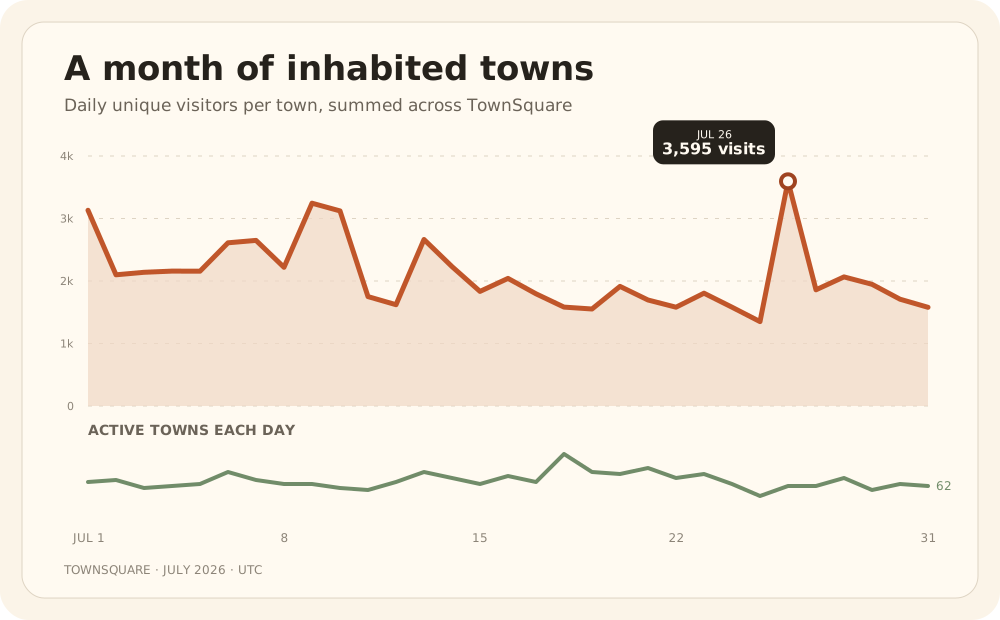 The Census Office counts each visitor once per town per day. Returning tomorrow means a fresh entry in the ledger; visiting the next town means troubling a second clerk.
July produced 65,289 daily unique town-visits. This is not the same as 65,289 globally unique people, however tempting that number may look in a headline. The Census Office does not follow residents from town to town. Each town issues its own anonymous number, so a person visiting two towns appears once in each ledger, as any traveller crossing two parish boundaries would expect. Everyone considers this a healthier arrangement, particularly the traveller.
Look at the whole month instead of adding each day together and the records show 59,551 unique visitor-and-town combinations. In plain language: nearly sixty thousand distinct arrivals, counted independently in the places they visited.
The busiest day was July 26, with 3,595 town-visits. The broadest was July 18, when visitors appeared in 78 different towns. These are two useful kinds of busy: one is a large crowd; the other is life spread across the map. The distinction matters to statisticians and anyone responsible for putting out chairs.
Most days had visitors in more than sixty towns. This may be the month's most encouraging figure. TownSquare was no longer one enormous launch-week crowd standing in the demo. People were turning up in dozens of separate places, which is much more like a collection of towns and much less like a queue.
55 new squares, and 36 new dots on the map
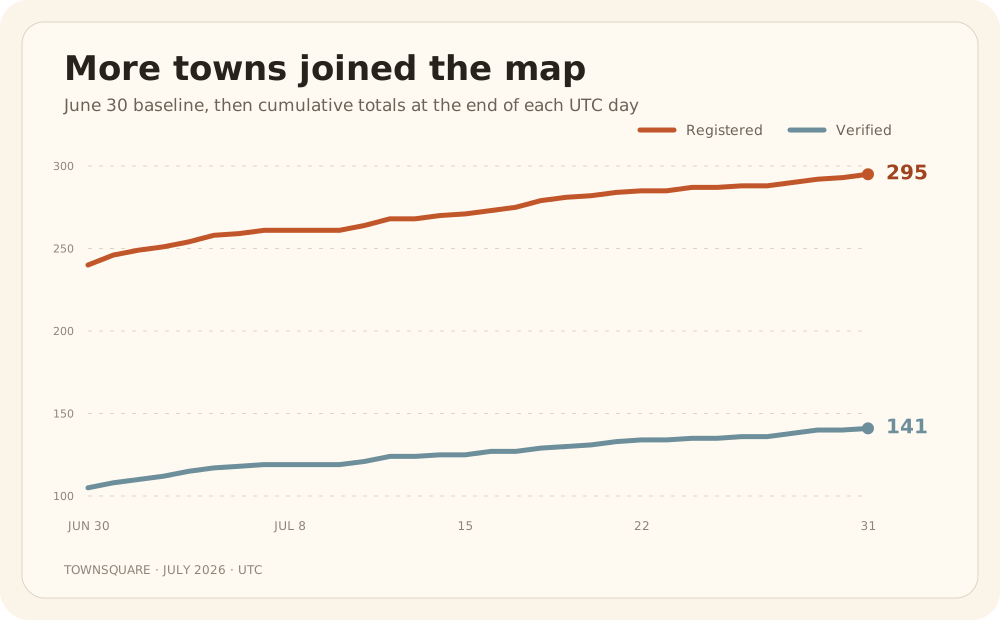 The Registry's closing tally for each day in July, beginning with June 30. All municipal clocks are kept in UTC to prevent an argument.
By the end of July, 295 TownSquares had been registered. 141 had been verified and added to the public map.
During the month itself, that meant 55 new registrations and 36 newly verified towns. The Registry and the Map Office are separate departments, as departments generally prefer to be. Registration means someone intends to found a town. Before the Map Office adds it as a public destination, the square must be installed and found at the address provided. Verification means a visitor can actually go there without being asked to imagine it.
At the time of going to press, the register has reached 297 websites, of which 144 are verified. The other 153 are not officially missing. They include private experiments, abandoned setups, and proprietors for whom "paste one small script" sits on the list immediately below "sort out the loft".
The Gazette resists treating every registration as a living town. A map should show places one can actually visit; otherwise it is merely an optimistic planning document.
29 towns where the grass is getting long
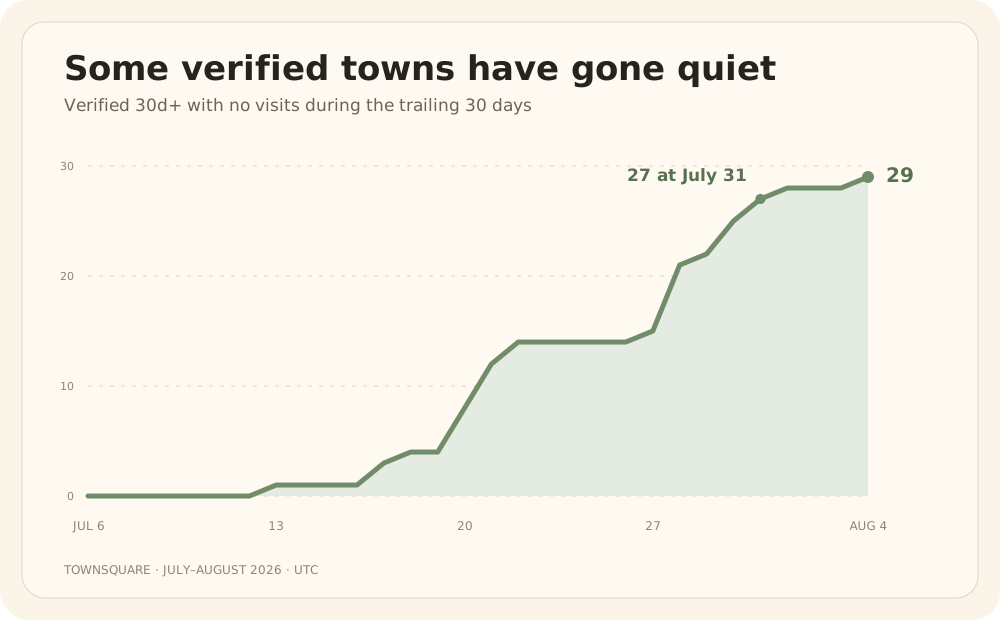 The Map Office's rolling list begins on July 6, the earliest day for which the preceding 30 days remain in the ledgers. It contained 27 towns at July's close and 29 when this report went to press.
The Map Office's internal ledger now lists 29 verified towns as inactive. To earn that label, a town must have been verified for more than 30 days and then recorded no visitors at all during the most recent 30. A newly founded town is therefore not declared abandoned merely because nobody came on Tuesday.
Perhaps the proprietors packed up and left. Perhaps they removed the square, moved it elsewhere, or are presiding over a truly exceptional spell of quiet. An empty square does not leave a forwarding address, so the Gazette has no way to know.
If a public map keeps every silent address forever, it slowly becomes less an atlas and more a book of local ghost stories. Before removing any town entirely, the clerks will begin marking long-inactive entries as ghost towns on the map. This gives proprietors fair warning, helps travellers know what to expect, and finally justifies the little ghost stamp the Map Office ordered without authorisation.
If a ghost town remains quiet, its entry may eventually fade and be cleared during an occasional spring cleaning. A returning proprietor could always verify the town again and have the sign repainted. The exact timetable has not been declared; the Council is still drafting the haunting notice and discussing where the broom is kept.
The conversations after launch week
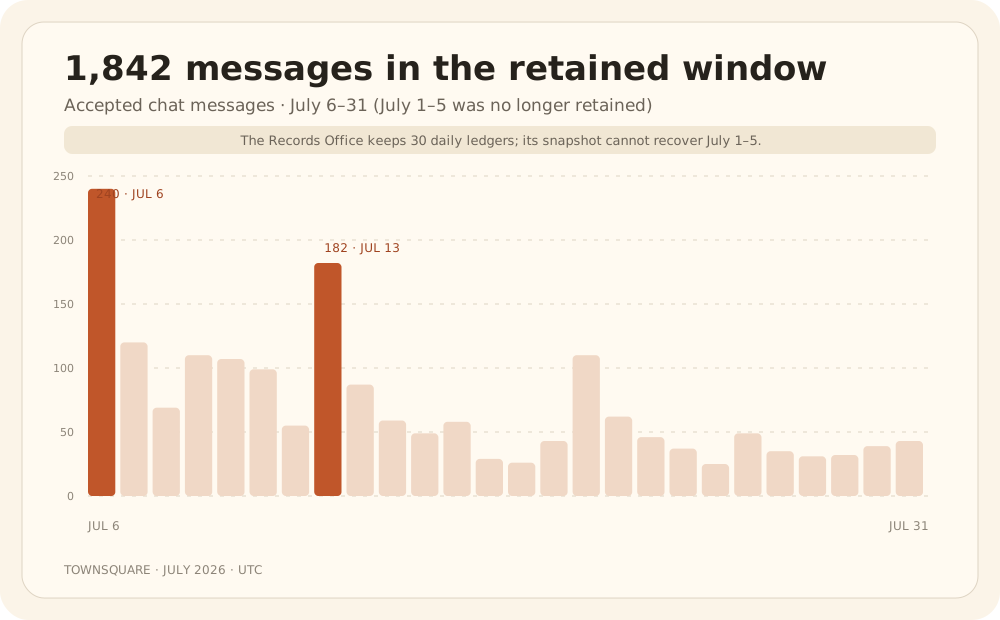 The Records Office could produce daily tallies from July 6 onward. Asked about the first five days, it referred the Gazette to its retention policy.
The surviving records contain 1,842 accepted chat messages from July 6 through July 31. July 6 was the busiest retained day, with 240 messages, followed by July 13 with 182.
There is an important gap. The Records Office keeps daily message tallies for only 30 days, owing to a strict retention policy and a surprisingly small cupboard. When the clerks assembled this report on August 4, the ledgers for July 1–5 had already been cleared away. The grand counter still puts TownSquare at about 332,200 messages by the end of July, but it cannot tell us precisely how many belong to those five days. The missing bars have therefore been left missing, rather than restored through the traditional statistical method of making something up.
The Records Office has submitted a request for a larger cupboard. Until it is approved, the Gazette will arrive before month-end with a notebook. This plan has been recorded on a note and placed somewhere safe.
Someone was always awake
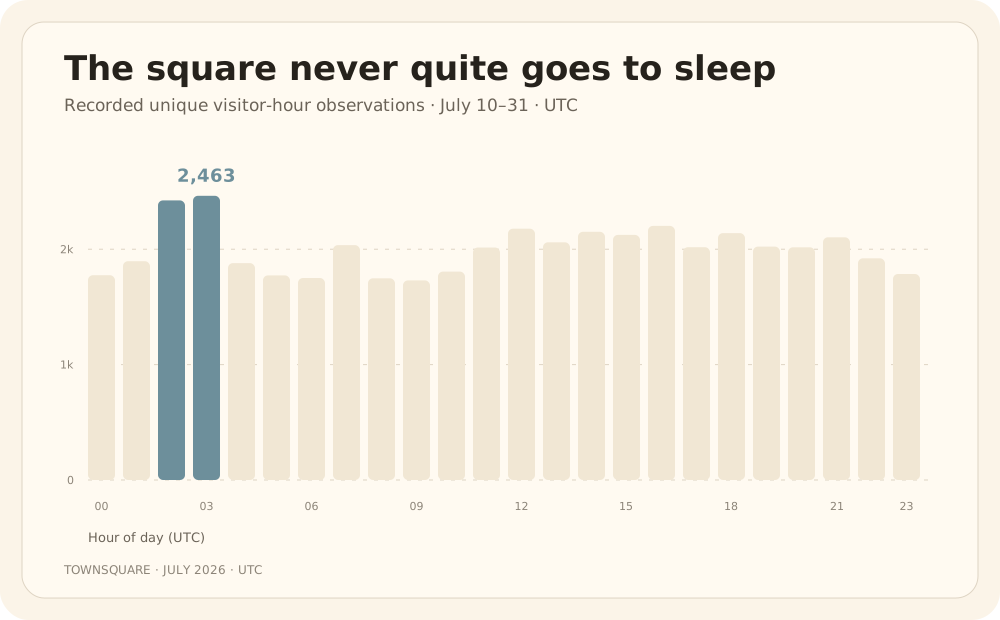 The Night Watch began hourly rounds on July 10. A visitor appears at most once in each town's log during an hour, however suspiciously they pace about.
The Night Watch offers another view of the month. From July 10 onward, its logs contain 48,018 visitor-hour observations. This is not time spent: one visitor seen in a town during an hour contributes one observation, whether they stayed for two minutes or fifty. Loitering is not charged by the hour.
The busiest hour across the retained period was 03:00–03:59 UTC, with 2,463 observations. TownSquare appears to keep unusual office hours. More charming, though, is the shape of the whole chart: every hour has activity. Even the quietest hour recorded more than 1,700 visitor-and-town observations across those 22 days.
TownSquare has no single opening time because its towns do not share a time zone. While one proprietor sleeps, another square is starting its morning. The map is still a very small world, but it is already large enough that somebody is nearly always wandering through it.
What these numbers do not know
The Statistics Office is intentionally modest. It can report that an anonymous visitor appeared in a town on a given UTC day or hour, count an accepted chat message, and record when a town registered or joined the map. It is nosy only in a limited and carefully documented sense.
It cannot follow the same person through three different towns. Its ledgers do not contain anybody's messages. Nor can it recreate daily tallies after the Records Office has emptied the cupboard. The Editorial Board kept present-day figures out of the July charts. Where the Registry and Treasury provide a current total, it is clearly labelled "at the time of going to press"; an August number wearing a July hat remains an August number.
This makes the charts a little less convenient and considerably more honest.
A small envelope from the Treasury
This is not a July figure, but the Treasury asked to be included and arrived with its own envelope. At the time of going to press, 16 supporters had contributed roughly US$160 to TownSquare, arriving in several currencies.
It is not a vast civic endowment, but it is real help towards hosting and continuing the work. More importantly, it means 16 people looked at this odd little collection of squares and decided it was worth keeping around. The Gazette is enormously grateful to every one of them.
Supporters also receive TownSquare Supporter add-ons, a small collection of optional civic privileges: hats for town owners and visitors, Telegram notifications when somebody says hello, a livestream overlay, and cats. The Council calls these "tokens of civic gratitude". The Treasury has asked the Gazette not to describe the programme as a hats-for-cash arrangement, particularly now that cats are involved.
Readers wishing to add something to the municipal biscuit tin may support the project here. The Treasury has confirmed that there is room.
On to August
July was less explosive than launch week, which is precisely what one hopes to see after an explosion. A novelty can draw a crowd for an afternoon. A place has people returning on ordinary Tuesdays, appearing in dozens of towns, and keeping a few lights on at every hour.
The Gazette thanks everyone who founded a town, linked a neighbour, stopped to wave, or left a kind message during July.
See you in the square.